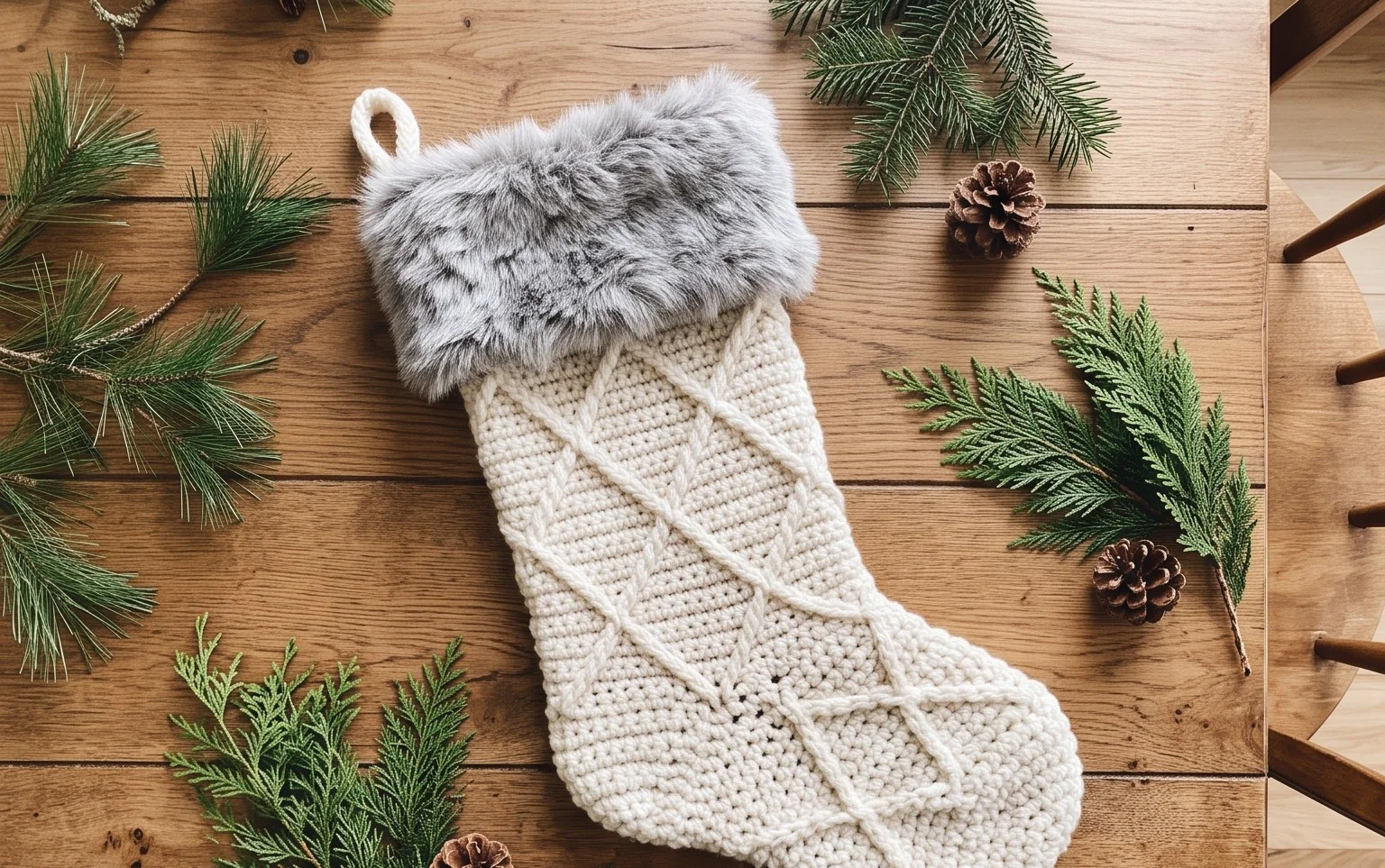
Diamonds & Fur Christmas Stocking: Free Crochet Pattern
A textured diamond pattern paired with a soft, fuzzy cuff brings a classic holiday feel to any fireplace mantel. This project works well for makers who enjoy seeing a decorative piece grow quickly under their hands, as the combination of standard stitches and faux fur trim keeps the work engaging from the cuff to the toe. You will learn how to manage color transitions between the solid main body and the fluffy top edge while keeping your tension steady. It is a rewarding way to personalize your holiday home decor with a handmade touch that lasts for years.
Why You’ll Love This Pattern
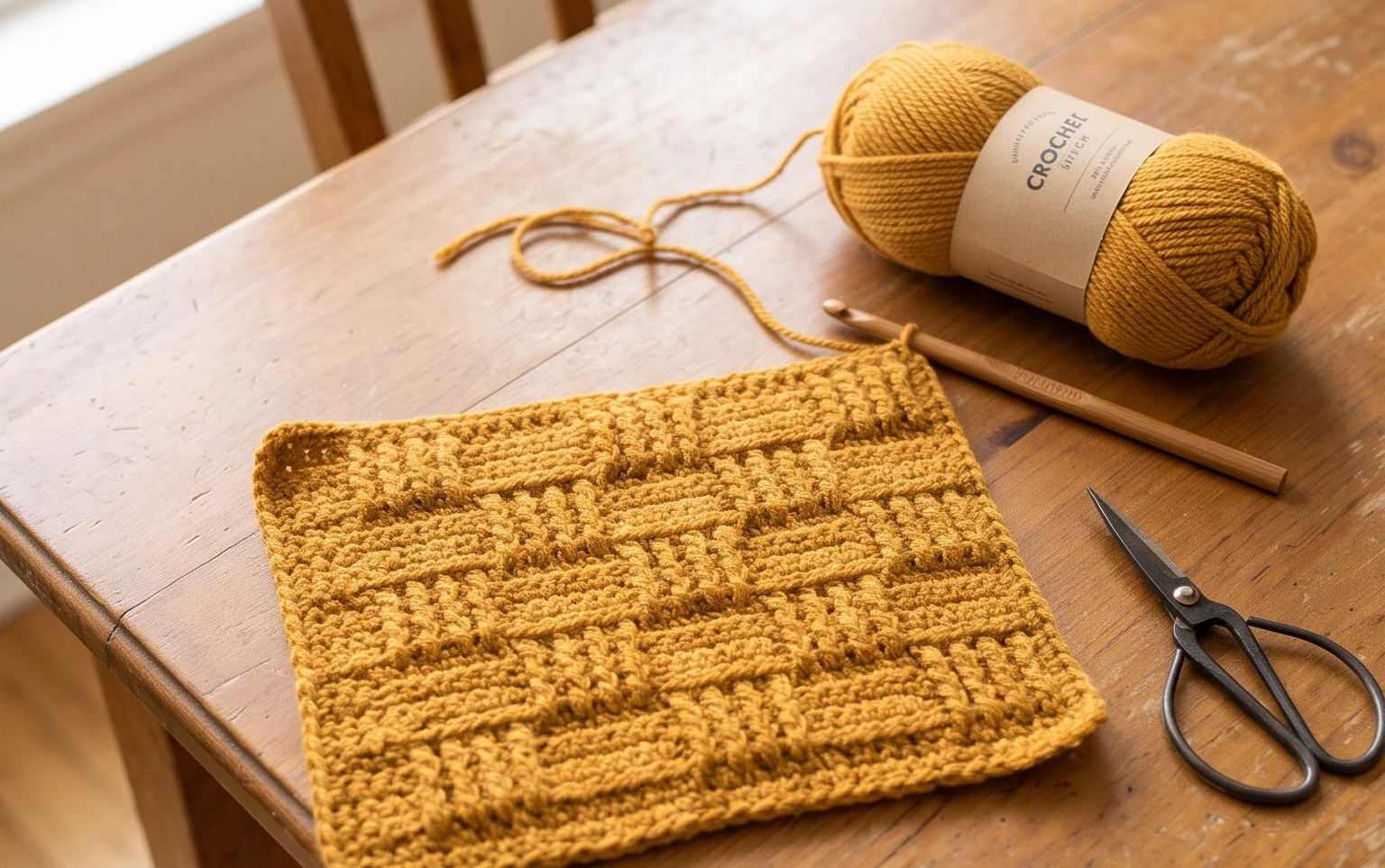
This classic crochet dishcloth relies on the textured grit stitch, which creates a dense fabric ideal for scrubbing kitchen surfaces. You will find this project incredibly relaxing because it requires only a simple two-row repeat that becomes intuitive within the first few inches. Because the design uses a worsted weight cotton yarn, it works up quickly in a single afternoon, making it a functional choice for those moments when you need a small, productive break from larger, more time-consuming garments. Beyond its utility, the repetitive nature of the pattern serves as a helpful way to practice consistent tension across long rows.
I managed to finish three of these over the weekend using leftover cotton from my stash. The texture is exactly what I needed for cleaning cast iron pans without scratching them.
— Sarah, home crafter
Pattern Overview & Skill Level
- Skill Level: Beginner
- Approximate Time: 1 to 2 hours per cloth
- Construction: Worked in flat rows starting from a foundation chain
- Finished Dimensions: Approximately 8 inches by 8 inches
Materials & Supplies Needed
- Yarn: Worsted weight (#4) 100% cotton yarn, approximately 60 yards per cloth
- Hook Size: 5.0 mm (H-8)
- Notions: Tapestry needle for weaving in ends, scissors
- Safe yarn substitutions: You may use a cotton-linen blend for increased durability, though this will result in a slightly stiffer fabric. Avoid acrylic yarns, as they are not absorbent and will melt if they touch a hot pan.
Stitch Guide & Abbreviations (US Terms)
- ch = chain
- st = stitch
- sc = single crochet
- dc = double crochet
- sk = skip
- Grit Stitch: A sequence of (sc, dc) worked into the same stitch, followed by skipping the next stitch.
Step-by-Step Pattern Instructions
The foundation of this dishcloth requires a chain count that is an odd number to ensure the pattern repeat remains consistent across every row.
- Foundation: Ch 31.
- Row 1: Sc in the second ch from the hook, dc in the same ch. Sk the next ch. Sc in the next ch, dc in the same ch, sk the next ch. Repeat from * to * until 2 chains remain. Sc in the last ch. Turn. (30 sts)
- Row 2: Ch 1. Sc in the first st, dc in the same st. Sk the next dc. Sc in the next sc, dc in the same sc, sk the next dc. Repeat from * to * until 2 sts remain. Sk the next dc, sc in the last sc. Turn. (30 sts)
Finishing the Cloth
Repeat Row 2 until the piece measures 8 inches long, ending on a wrong-side row. To finish, cut your yarn leaving a 6-inch tail. Pull the tail through the final loop on your hook to secure the knot. Use your tapestry needle to weave the loose ends back and forth through the stitches on the back side of the cloth to ensure they do not fray during repeated washings.
Care & Washing Instructions
- Machine wash your cotton dishcloths in warm water on a gentle cycle to remove oils and food residue.
- Tumble dry on low heat or lay flat on a drying rack to prevent the cotton fibers from shrinking or becoming misshapen.
- Pull the damp cloth into its original square shape immediately after washing and allow it to air dry to ensure it maintains a neat, professional appearance.
Pro Tips & Common Mistakes to Avoid
Maintaining even tension is the most important factor in ensuring your dishcloth lies flat. If you find the edges curling, try going up a half-size in your hook, or relax your grip on the yarn as you pull through each loop. Keep a stitch marker on the first stitch of every row until you are comfortable identifying the gap between the single crochet and double crochet; this prevents accidental increases or decreases that could turn your square into a trapezoid. When weaving in your ends, avoid cutting the yarn too close to the fabric, as the friction of cleaning can cause short ends to poke out over time. If you decide to make a larger dishcloth, remember that every additional inch of width will increase your yarn requirement by approximately 10 to 15 percent.
Frequently Asked Questions
Can I use a larger hook to make the cloth work up faster?
Yes, using a larger hook will make the fabric looser and more flexible. Keep in mind that a looser weave may hold less soap and be slightly less effective for scrubbing stubborn debris.
Is this pattern suitable for someone who has never crocheted before?
This is an excellent project for beginners. Because it only uses basic stitches and a repeating sequence, you will quickly learn how to recognize where to place your hook in the subsequent rows.
How do I adjust the size of the dishcloth?
You can change the width by chaining any odd number of stitches for your foundation. To adjust the height, simply add or subtract rows until the cloth reaches your desired length.
Can I sell the dishcloths I make from this pattern?
You are welcome to sell finished items made from this pattern. Please credit the original design and use your own photographs when listing items for sale online.
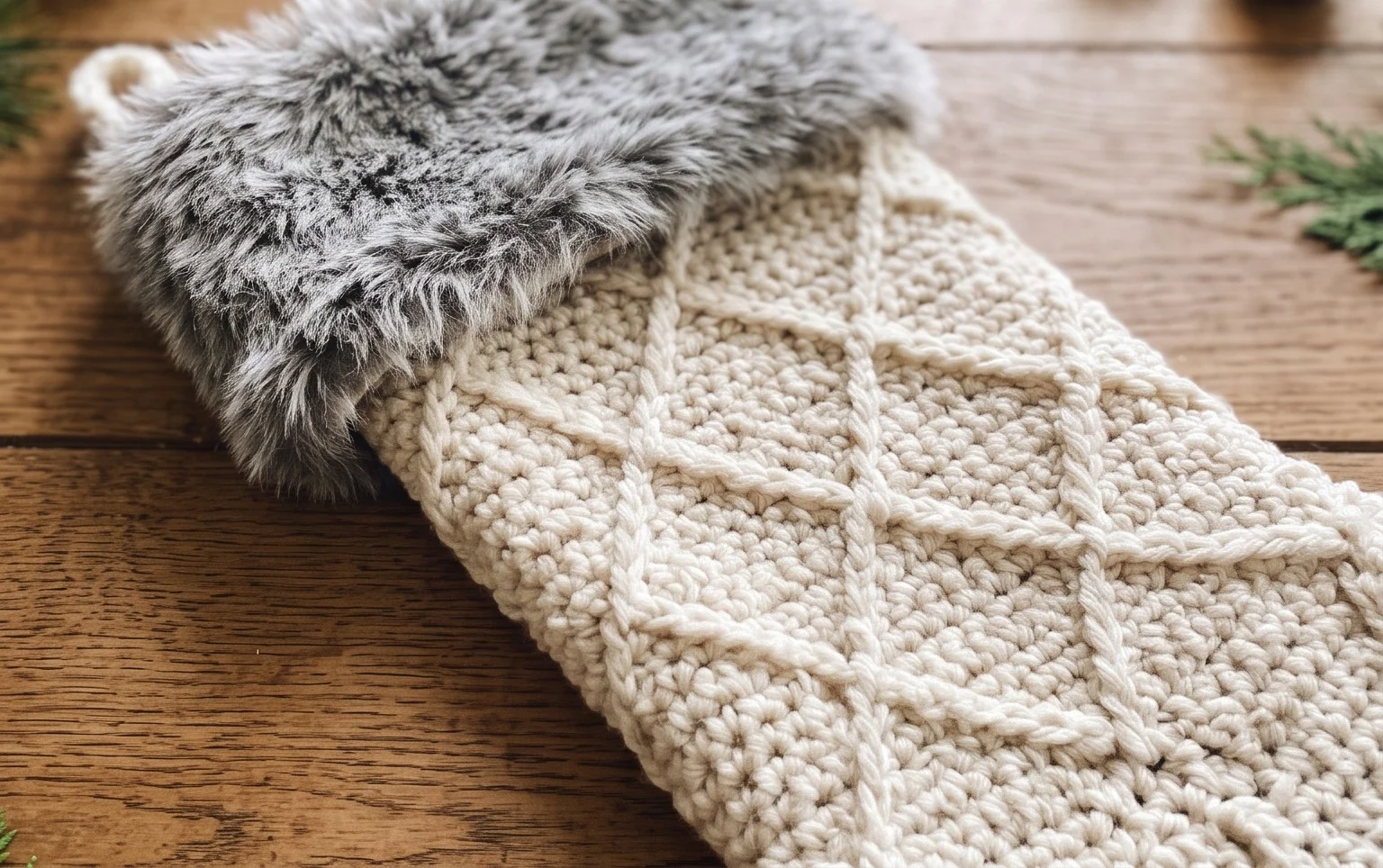
Your finished project brings a cozy, handcrafted charm to the holiday season that store-bought items simply cannot match. You might try working this in deep forest green or rich burgundy yarn for a traditional look, or even adding a personalized wooden name tag to the cuff for a thoughtful gift. Snap a photo of your stocking hanging on the tree or mantle to share with your friends. You can browse my collection of winter project ideas for more inspiration to keep your hooks moving this December.