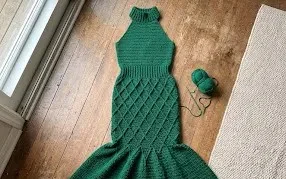
Emerald Mermaid Gown Free Crochet Pattern with Lace
Emerald yarn gives this mermaid gown a rich, jewel-like color, while the diamond lattice adds openwork texture from the bodice down the skirt. The fitted shape and flared hem create a flowing silhouette that feels special for a celebration or a handmade gift. This is a garment project for crocheters who enjoy shaping and are ready to work with a stitch pattern; confident beginners can take it at a steady pace, too. If you usually make home décor, it offers a useful chance to explore wearable crochet. You’ll learn how the lattice stitches form repeating diamonds and how careful stitch counting helps keep the fabric even as the gown takes shape. Checking gauge before you begin can also help the finished piece fit as intended.
Why You’ll Love This Pattern
A square of worsted cotton makes a useful dishcloth that can be washed and used again. This beginner-friendly pattern uses single crochet throughout, so you can focus on keeping your edges straight instead of learning several stitches at once. The simple rows are easy to pause and pick up later, and one skein usually provides enough yarn for a cloth with some left over. Make the edges neat by counting each row, or use a stitch marker to keep track of the first stitch.
The rows were easy to follow, and the cotton made a cloth that feels sturdy without being stiff. I finished it in an afternoon.
— Maya, sample tester
Pattern Overview & Skill Level
- Skill Level: Beginner. You need to chain and single crochet in rows.
- Approximate Time: About 2–3 hours, depending on your crochet speed and how often you stop to check the stitch count.
- Construction: The cloth is worked flat in rows from a foundation chain. It has no seams or separate pieces.
- Finished Dimensions & Sizing: Approximately 8.5 × 7.5 in (22 × 19 cm) before washing, based on the gauge below. Cotton and individual tension can change the final size.
Materials & Supplies Needed
- Yarn: About 90 yd (82 m) of worsted-weight #4, 100% cotton yarn. Use one color or divide the yardage between two colors. Cotton absorbs water and tolerates frequent washing.
- Hook: 5.0 mm / H-8 crochet hook. If your stitches are very tight, try a 5.5 mm / I-9 hook and check the finished width.
- Notions: Tapestry needle for weaving in the starting and finishing tails, scissors, and a ruler or tape measure. A stitch marker is optional.
- Gauge: 14 single crochet stitches and 16 rows measure about 4 in (10 cm) in the pattern stitch, after gently flattening the swatch without stretching it. Gauge is a guide for the finished size, not a reason to pull the fabric out of shape.
- Substitutions: A different 100% cotton yarn of similar thickness is the closest substitute. A thinner yarn makes a smaller, lighter cloth; a thicker yarn makes a larger, denser cloth and may need a larger hook. Acrylic can be used, but it absorbs and handles heat differently from cotton. Check its yarn label before using it for hot dishes.
Stitch Guide & Abbreviations (US Terms)
- ch: Chain. Yarn over and pull through the loop on the hook.
- sc: Single crochet. Insert the hook in the indicated stitch, yarn over and pull up a loop, then yarn over and pull through both loops on the hook.
- st / sts: Stitch / stitches.
- rep: Repeat the stated action.
- US terms: The stitch names in this pattern follow standard US crochet terminology.
The turning chain at the start of each row does not count as a stitch. Work the first single crochet into the first stitch of the row, directly below the turning chain. This keeps the sides straight and maintains 30 stitches on every row.
Step-by-Step Pattern Instructions
Dishcloth
- Foundation: Ch 31. The foundation chain gives you 30 stitches to work into, because the first chain is skipped for Row 1.
- Row 1: Sc in the second ch from the hook and in each ch across. (30 sts)
- Row 2: Ch 1 and turn. Sc in each st across. (30 sts)
- Rows 3–30: Rep Row 2. Count the stitches at the end of each row; every row has 30 sts. Your cloth should measure close to 8.5 × 7.5 in (22 × 19 cm), though gauge and yarn can affect the measurements.
- Finish: After Row 30, fasten off, leaving a tail about 6 in (15 cm) long. Pull the tail through the last loop to secure it. Thread the tail onto a tapestry needle and weave it through several stitches on the wrong side. Weave in the foundation tail in the same way, changing direction once so it is less likely to come loose.
If you want to check the shape before finishing, lay the cloth flat without stretching it. The edges should be close to square. A slanted edge often means the first or last stitch was missed, or that an extra stitch was worked into the turning chain. Correcting the count while you crochet is easier than trying to even out the edge at the end.
Care & Washing Instructions
- Wash cotton in cool or warm water, up to 40°C (104°F), with similar colors; follow the yarn label if it gives different instructions.
- Dry flat or tumble-dry on low if the yarn label allows it; reshape the cloth while it is damp.
- Block lightly by smoothing the damp cloth to its finished measurements; avoid stretching the corners or pressing a hot iron directly onto the yarn.
Pro Tips & Common Mistakes to Avoid
- Keep tension steady: Relax your hands and let the hook glide through the loops. Tight foundation chains can make the bottom edge narrower than the rest of the cloth. If that happens often, use a hook one size larger for the chain only.
- Count every row: Check for 30 stitches before turning. A stitch marker in the first stitch can make the row edge easier to spot, especially when the yarn is dark or textured.
- Hide tails securely: Weave each end through the backs of several stitches, then change direction before trimming. Do not cut the tail right next to the fabric, where washing may loosen it.
- Adjust the size with a plan: For a wider cloth, chain more stitches, then work into the second chain and each chain across. Add the same number of stitches to every row. Extra width and length both use more yarn; make a smaller cloth by reducing the foundation chain and working fewer rows.
Frequently Asked Questions
Can I use a different cotton yarn?
Yes. Choose a similar worsted-weight cotton for a result close to the sample. If you switch to a thinner or thicker yarn, make a small swatch first because the cloth’s size and texture will change. Check the yarn label for washing and heat guidance.
How can I make the dishcloth larger or smaller?
Change the foundation chain to adjust the width, and work more or fewer rows to adjust the length. The starting chain should contain one more chain than the number of stitches you want in Row 1. Keep the same stitch count across every row to maintain straight sides.
Is this pattern suitable for a first crochet project?
Yes, if you are comfortable making a chain and single crochet. The stitch count stays the same from Row 1 through Row 30, so it is a straightforward way to practise consistent tension and finding the first and last stitches.
May I sell dishcloths made from this pattern?
Check the pattern designer’s terms before selling finished items, and follow any restrictions they list. Use your own product photos and describe the yarn and care instructions accurately. This pattern text itself does not grant commercial rights.
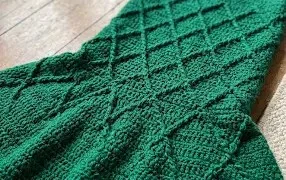
When the final rows are complete, the emerald color, open diamond texture, and flared silhouette come together in a gown with a distinctly handmade finish. For a simple variation, choose a deep teal yarn and keep the stitch pattern and shaping the same. Take a photo in natural light so the lattice details show clearly, then share it on Pinterest or your favorite social media platform. If you post your progress along the way, a close-up of the stitch pattern can be helpful to other crocheters, too. After finishing this garment, explore more free crochet patterns on the blog for your next project, from smaller makes to other wearable designs.